


THE BARGAINING PROCESS
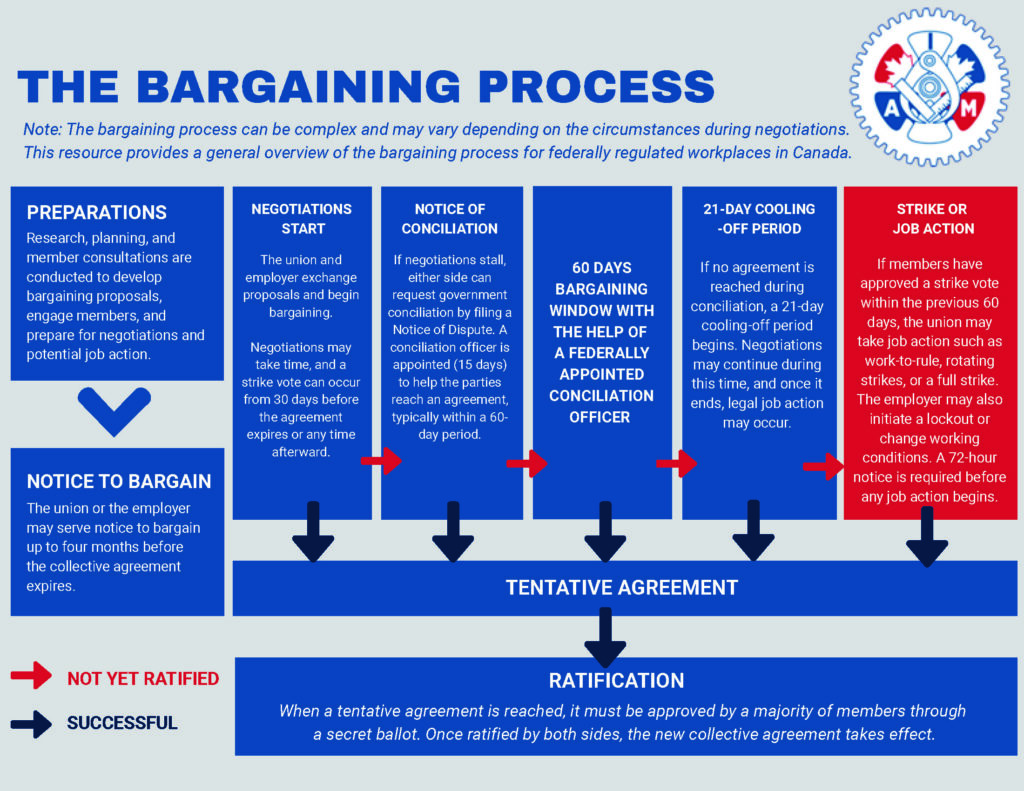
Note: The bargaining process can be complex and may vary depending on the circumstances during negotiations. This resource provides a general overview of the bargaining process for federally regulated workplaces in Canada.
PREPARATIONS
Research, planning, and member consultations are conducted to develop bargaining proposals, engage members, and prepare for negotiations and potential job action.
NOTICE TO BARGAIN
The union or the employer may serve notice to bargain up to four months before the collective agreement expires.
NEGOTIATIONS START
The union and employer exchange proposals and begin bargaining. Negotiations may take time, and a strike vote can occur from 30 days before the agreement expires or any time afterward.
NOTICE OF CONCILIATION
If negotiations stall, either side can request government conciliation by filing a Notice of Dispute. A conciliation officer is appointed (15 days) to help the parties reach an agreement, typically within a 60-day period.
60 DAYS BARGAINING WINDOW WITH THE HELP OF A FEDERALLY APPOINTED CONCILIATION OFFICER
21-DAY COOLING-OFF PERIOD
If no agreement is reached during conciliation, a 21-day cooling-off period begins. Negotiations may continue during this time, and once it ends, legal job action may occur.
STRIKE OR JOB ACTION
If members have approved a strike vote within the previous 60 days, the union may take job action such as work-to-rule, rotating strikes, or a full strike. The employer may also initiate a lockout or change working conditions. A 72-hour notice is required before any job action begins.
TENTATIVE AGREEMENT
RATIFICATION
When a tentative agreement is reached, it must be approved by a majority of members through a secret ballot. Once ratified by both sides, the new collective agreement takes effect.